
অসমীয়া ঢোল / Assamese Dhol

Assamese Dhol: The Beating Heart of Bihu
The vibrant spirit of Assam comes alive through the powerful rhythm of the Assamese Dhol. More than just a musical instrument, the Dhol is a symbol of Assamese identity, culture, and celebration. Deeply connected to Rongali Bihu, it brings energy and life to Bihu songs and dances.
অসমীয়া ঢোল: বিহুৰ হৃদস্পন্দন
Assamese Dhol হৈছে অসমৰ সংস্কৃতিৰ এক অমূল্য প্ৰতীক। বিশেষকৈ Rongali Bihuৰ সময়ত ঢোলৰ তালেই বিহুৰ আনন্দক জীৱন্ত কৰি তোলে।
History and Tradition
The Assamese Dhol has existed since at least the 14th century, with mentions found in ancient Assamese literature and Buranjis. According to folklore, the first Dhol was made of gold during the Satya Yuga and played by divine beings before evolving into its present wooden form.
During the Ahom era, the Dhol gained royal importance. Legends say the sound of the Dhol welcomed Chaolung Sukapha upon his arrival in Assam in 1214 AD.
ইতিহাস আৰু পৰম্পৰা
অসমীয়া ঢোলৰ ইতিহাস বহু পুৰণি। বুৰঞ্জী আৰু পুৰণি সাহিত্যত ইয়াৰ উল্লেখ পোৱা যায়। লোকবিশ্বাস অনুসৰি সত্য যুগত প্ৰথম ঢোল সোণেৰে বনোৱা হৈছিল।
আহোম যুগত ঢোল অধিক গুৰুত্ব লাভ কৰে। কোৱা হয় যে Chaolung Sukapha অসমলৈ অহাৰ সময়ত ঢোল বজোৱা হৈছিল।
Making of the Dhol
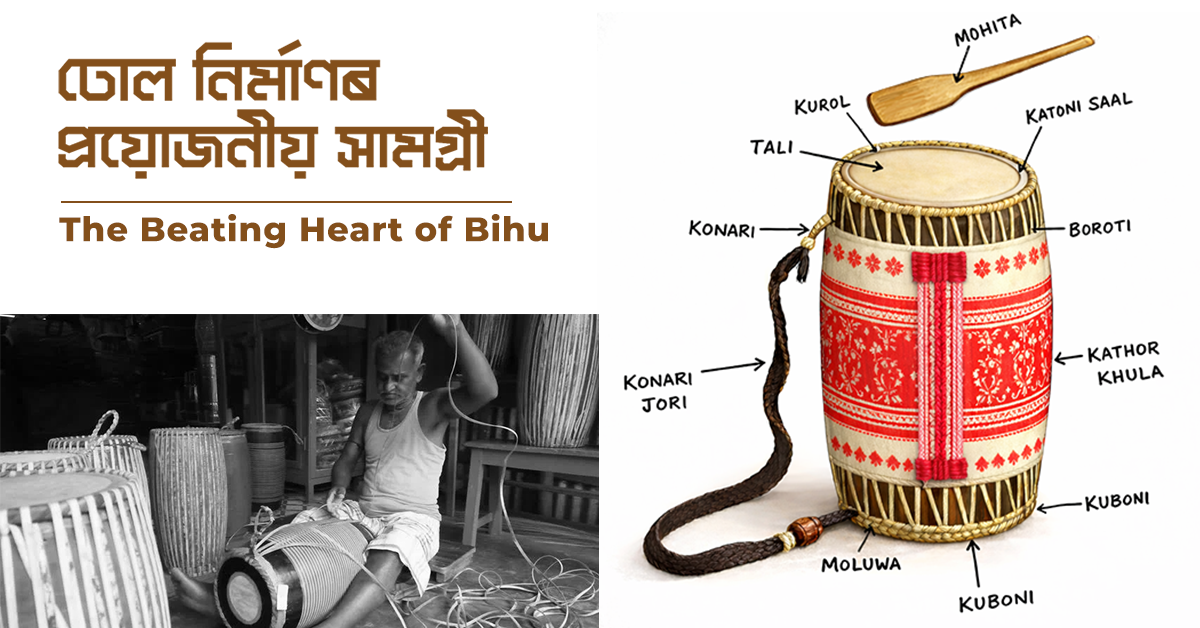
The Assamese Dhol is handcrafted using traditional methods.
Main Parts:
Dima – Wooden barrel body, usually made from jackfruit wood
Tali – Left drum head, played by hand
Kobani – Right drum head, played with a stick
Barati – Leather straps used for tightening
The drum heads are made using goat or cow hide. It is played with bare hands and a bamboo stick called Dholar-Mari, often decorated with a Gamosa.
ঢোল তৈয়াৰ প্ৰক্ৰিয়া
ঢোল পৰম্পৰাগতভাৱে হাতেৰে তৈয়াৰ কৰা হয়।
মুখ্য অংশসমূহ:
ডিমা – কাঠৰ মূল অংশ
তালি – হাতেৰে বজোৱা বাওঁফাল
ক’বনী – কাঠিৰে বজোৱা সোঁফাল
বাৰাতি – চামৰাৰ ফিতা
সাধাৰণতে কঁঠাল কাঠ আৰু গৰু বা ছাগলীৰ ছাল ব্যৱহাৰ কৰা হয়। ঢোলত Gamosa বান্ধি সজোৱা হয়।
Types of Assamese Dhol
Pati Dhol – Commonly used in Bihu performances
Bor Dhol – Large drum with deep resonance
Dhepa Dhol – Popular in Darrang-Mangaldai region
Oja Dhol – Associated with traditional Oja performances
Though smaller than many Indian drums, the Assamese Dhol produces a loud and energetic sound.
ঢোলৰ প্ৰকাৰ
পাতি ঢোল
বৰ ঢোল
ঢেপা ঢোল
ওজা ঢোল
Cultural Importance
The Dhol is the heartbeat of Bihu celebrations and an essential part of:
Bihu dance and songs
Husori performances
Weddings and rituals
The player of the Dhol is called a Dhulia, whose rhythms bring joy and excitement to every gathering.
Recently, the Assamese Dhol received a GI (Geographical Indication) tag, recognizing its unique cultural and traditional value.
সাংস্কৃতিক গুৰুত্ব
ঢোল হৈছে বিহুৰ প্ৰাণ।
ই ব্যৱহাৰ কৰা হয়—
বিহু নৃত্যত
হুঁচৰিত
বিয়া আৰু উৎসৱত
ঢোল বজোৱা ব্যক্তিক “ঢুলীয়া” বুলি কোৱা হয়।
অসমীয়া ঢোলে GI টেগ লাভ কৰি ইয়াৰ সাংস্কৃতিক গুৰুত্বক স্বীকৃতি লাভ কৰিছে।


