
বিহু পেঁপা / Bihu Pepa

বিহু পেঁপা: অসমৰ বসন্তৰ আত্মা / Bihu Pepa: The Soulful Sound of Assam’s Spring
বিহুৰ আনন্দ, ঢোলৰ তাল আৰু নৃত্যৰ উচ্ছ্বাস পেঁপাৰ সুৰ অবিহনে অসম্পূৰ্ণ। Bihu Pepa হৈছে অসমৰ এক অমূল্য সাংস্কৃতিক ঐতিহ্য।
ই বিশেষকৈ Rongali Bihuৰ সময়ত বজোৱা হয়, যি বসন্তৰ আগমন আৰু নতুন বছৰৰ সূচনা ঘোষণা কৰে।
The rhythmic beats of the Dhol and the vibrant energy of Bihu are incomplete without the deep, resonant call of the Bihu Pepa. A timeless symbol of Assamese culture, the Pepa is more than just a musical instrument—it is the voice of spring, love, and agrarian life.
Played during Rongali Bihu, the Pepa heralds the Assamese New Year and celebrates the renewal of nature and life.
পেঁপা কি? / What is the Bihu Pepa?
পেঁপা হৈছে ম’হৰ শিঙেৰে বনোৱা এখন বায়ুবাদক বাদ্যযন্ত্ৰ।
বৈশিষ্ট্য:
ম’হৰ শিঙৰ দেহ
বাঁহৰ মুখনি
সুৰ নিয়ন্ত্ৰণৰ বাবে ফুটো
ধাতুৰে অলংকৃত
The Bihu Pepa is a traditional wind instrument made primarily from buffalo horn. It produces a unique, powerful sound that carries across fields and open spaces.
Key Features:
Made from buffalo horn (body)
Fitted with a bamboo pipe called mukhoni
Includes finger holes to control pitch
Often decorated with a metal ring
Its sound is both raw and melodic—perfectly capturing the spirit of rural Assam.
ইতিহাস আৰু বিকাশ
পেঁপাৰ ইতিহাস বহু পুৰণি, ই Brahmaputra Riverৰ দৰে প্ৰাচীন বুলি কোৱা হয়।
কৃষিভিত্তিক সমাজৰ সৈতে জড়িত
টিবেটো-বাৰ্মান সংস্কৃতিৰ সৈতে সম্পৰ্ক
চুতিয়া ৰাজ্যত কালী ৰূপত উন্নত সংস্কৰণ ব্যৱহাৰ
১৯৬০ৰ দশকৰ পৰা ই মঞ্চত প্ৰদৰ্শিত হ’বলৈ আৰম্ভ কৰে।
History and Evolution
The origins of the Pepa are ancient, often said to be “as old as the Brahmaputra River” itself.
Ancient Roots
The instrument has been part of Assamese life for centuries, deeply tied to farming traditions and seasonal celebrations.
Cultural Connections
Similar horn instruments have been found among Tibeto-Burman communities and even in ancient China, indicating a shared cultural lineage.
Ahom-Era Influence
During the Chutia Kingdom, a refined version of the Pepa known as Kaali was used, showing its evolution over time.
Modern Transition
Originally played in open fields during agricultural festivities, the Pepa gained stage recognition in the 1960s as Bihu performances became more organized and widespread.
সাংস্কৃতিক গুৰুত্ব
বিহুৰ আনন্দৰ মূল সুৰ
কৃষিজীৱনৰ প্ৰতীক
Dhol আৰু Gogonaৰ সৈতে একেলগে ব্যৱহাৰ
Cultural Importance
Spirit of Bihu
The Pepa is central to the festive atmosphere of Rongali Bihu. Its sound signals joy, romance, and celebration.
Agricultural Connection
Traditionally played during the sowing season, it reflects the hopes and rhythms of agrarian life.
Musical Ensemble
The Pepa is an essential part of the Bihu musical group, performed alongside:
Dhol
Gogona
Together, they create the iconic soundscape of Bihu dance and songs.
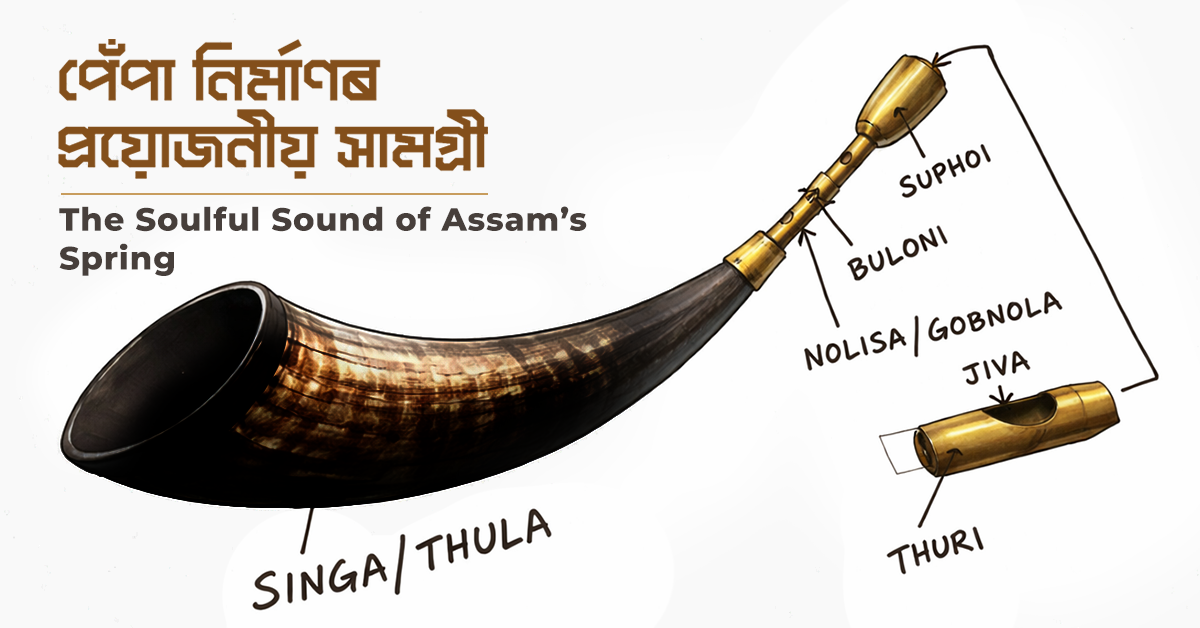
গঠন
পেঁপাৰ চাৰিটা অংশ—
হিং / ঠুলা
গফনলা
চুপহি
মুখনি
Construction of the Pepa
The Pepa is carefully crafted using traditional techniques and consists of four main parts:
Hing / Thula – The buffalo horn (main body)
Gofnola – The reed pipe
Supohi – The reed component
Mukhoni – The mouthpiece
Typically, the instrument is less than two feet long, making it portable and easy to play during performances.
সংৰক্ষণৰ প্ৰয়োজন
ম’হৰ সংখ্যা হ্ৰাস
আধুনিক বাদ্যযন্ত্ৰৰ প্ৰভাৱ
শিল্পীৰ সংখ্যা কমি যোৱা
তথাপিও, পেঁপা সংৰক্ষণৰ বাবে চেষ্টা চলি আছে।
Preservation and Challenges
Despite its cultural importance, the Pepa faces modern challenges:
Decline in buffalo population affecting raw material availability
Shift toward modern instruments
Reduced number of traditional artisans
However, efforts are being made to preserve this heritage instrument through cultural programs and awareness.
উপসংহাৰ
পেঁপা অসমৰ সংস্কৃতিৰ জীৱন্ত প্ৰতীক।
ই আমাৰ পৰিচয়, ঐতিহ্য আৰু আনন্দৰ সুৰ।
জয় আই অসম।
Conclusion
The Bihu Pepa is not just an instrument—it is the heartbeat of Assam’s cultural identity. Its sound carries stories of love, खेत-खेत (fields), festivals, and tradition.
As long as the melodies of the Pepa echo during Bihu, the spirit of Assam will continue to thrive.
Joi Aai Axom.


